Flower Doodle Redwork: A Designer's Review
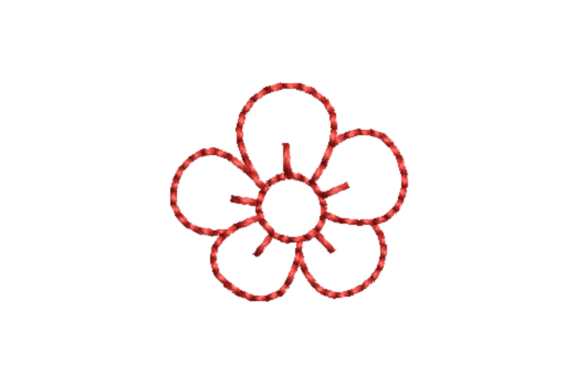
As a professional embroidery designer who spends hours digitizing and testing files before they ever touch a customer’s garment, I approach every new machine embroidery design with a healthy dose of skepticism. We have all downloaded promising files that turned into thread nests or distorted shapes on the hoop. When evaluating the Flower Doodle Redwork Embroidery Design, my primary focus is not just its aesthetic charm, but its structural integrity in real-world production. This design falls squarely into the Outline Flowers category, a staple for makers who need versatile, low-stitch-count graphics that stitch out quickly without sacrificing visual impact.
The first impression of this Flower Doodle Redwork Embroidery Design is one of deliberate simplicity. In an industry often saturated with overly dense, complex digitizing, this clean outline style feels like a breath of fresh air. It captures a whimsical, hand-drawn mood that translates beautifully to modern custom apparel and home goods. However, as any experienced embroiderer knows, "simple" is often harder to execute perfectly than "complex." There is nowhere to hide mistakes in a redwork style. The lines must be smooth, the curves organic, and the registration precise. Upon reviewing the digital file, the pathing appears logical, minimizing unnecessary jumps and trims, which is a critical factor for maintaining efficiency in a craft business environment.
Real-World Application: The Linen Tote Bag Test
To truly judge the viability of this embroidery file, I mentally placed it in a specific production scenario: creating a line of botanical tote bags for a summer market collection. Tote bags are high-wear items that require durable stitching. For this project, I envisioned using a natural linen canvas. Linen has a distinct weave and texture that can sometimes swallow fine details or cause puckering if the stitch density is too aggressive.
In this context, the Flower Doodle Redwork Embroidery Design performs exceptionally well because it relies on line work rather than heavy fill areas. When stitching onto textured fabrics like linen or cotton canvas, a running stitch or light satin stitch allows the fabric to remain flexible. If this were a dense floral applique design or a fully filled motif, the stiffness might detract from the drape of the bag. Instead, this redwork style complements the organic nature of the material. For an Etsy seller or boutique owner, this means the finished product retains a premium, handmade feel rather than looking like a mass-produced patch glued onto fabric. The minimal aesthetic also photographs beautifully for printable mockups and social media listings, where clean lines read clearly even in small thumbnail images.
Fabric Compatibility and Stabilizer Strategy
While this design is versatile, it demands respect regarding substrate selection. Redwork and outline styles are unforgiving on unstable fabrics. Here is how I assess its performance across different materials:
- Woven Cottons and Linens: These are the ideal homes for this design. The stability of the weave supports the linear stitches, resulting in crisp definition. Use a medium-weight cut-away or tear-away stabilizer depending on the fabric weight to prevent distortion.
- Stretchy Knits and Sweatshirts: Caution is required here. While sweatshirt embroidery is a popular use case for doodle art, the lack of internal structure in outline designs can lead to tunneling on knits. You must use a fusible no-show mesh stabilizer and potentially a topping to keep the stitches sitting on top of the fleece or jersey surface.
- Sheer or Lightweight Fabrics: For baby embroidery projects like onesies or muslin blankets, this design is excellent due to its low stitch count, which prevents heavy, scratchy backsides. However, ensure your tension is perfect; loose bobbin threads will be visible through sheer fabrics with outline work.
- Dark Fabrics: Traditional redwork implies red thread on white, but this design adapts well to high-contrast pairings. On dark denim or navy canvas, switching to cream or metallic thread colors creates a stunning visual pop. Just verify that the digitizer hasn't included any underlay meant for white fabric that might show through lighter thread on dark backgrounds.
Commercial Viability for Makers and Sellers
For those running a small shop product line or selling personalized gifts, time is money. One of the strongest selling points of the Flower Doodle Redwork Embroidery Design is its production speed. Unlike complex landscapes or portraits, this outline style stitches out rapidly. This efficiency allows you to offer lower price points while maintaining healthy margins, or to increase your output volume during peak seasons like holiday markets.
Furthermore, the "doodle" aesthetic aligns perfectly with current trends favoring cottagecore, minimalist botanical, and slow-fashion visuals. Customers perceive these cleaner designs as more artistic and less industrial. When used on personalized gift items like tea towels or pillow covers, the design adds value without overwhelming the personalization text. It acts as a supporting graphical element that enhances the sentiment rather than competing with it. For digital embroidery file sellers, offering such a versatile, trend-aware design increases the likelihood of repeat customers who trust your curation of usable, test-worthy assets.
Critical Pre-Stitch Checklist for Professionals
Before loading this digital embroidery file into your machine for a client order or inventory build, run through this practical checklist to ensure professional results:
- Verify Hoop Size and Dimensions: Never assume the design fits your intended placement. Measure the actual stitch area against your garment's printable zone. A design that looks proportional on screen may be too large for a toddler's chest or too small for an adult apron bib.
- Test Stitch on Scrap Material: Always test on the exact fabric and stabilizer combination you plan to use for the finished product. Check for gapping between stitch segments and ensure the outline doesn't wander off the intended path.
- Evaluate Thread Weight: Standard 40wt rayon or polyester is typical, but for a true vintage redwork look, consider testing a 30wt cotton thread. Thicker thread can change the perceived density and coverage of the outline.
- Check Licensing Terms: Before selling physical items or including this in your own design assets bundle, confirm the commercial license limits. Some designers restrict the number of physical sales or prohibit digitizing modifications.
- Inspect Small Details: Zoom in on the file in your editing software. Ensure there are no tiny, disconnected stitch points that could cause needle breaks or thread bunches, especially if resizing the design smaller than its original dimensions.
Final Verdict on Design Integrity
The Flower Doodle Redwork Embroidery Design succeeds because it understands its purpose. It does not try to be a painting; it aims to be a charming, functional accent. For the handmade product creator, it offers a reliable balance of speed and style. For the hobbyist, it provides a forgiving yet rewarding stitching experience. Its clean lines make it adaptable for everything from holiday embroidery on stockings to everyday wearables.
However, its success relies entirely on the operator's understanding of stabilization and fabric pairing. Treat it with the same technical rigor you would apply to a complex jacket back piece. When executed correctly, this design elevates the perceived value of your work, reinforcing brand consistency and customer trust. It is a testament to the fact that in machine embroidery, thoughtful minimalism often outperforms excessive complexity. Whether you are decorating a cap, crafting an embroidered patch, or building a cohesive Etsy shop aesthetic, this redwork flower is a dependable asset in your digital library, provided you respect the fundamentals of the craft.