Robin Birds on Bare Branch: A Designer's Review
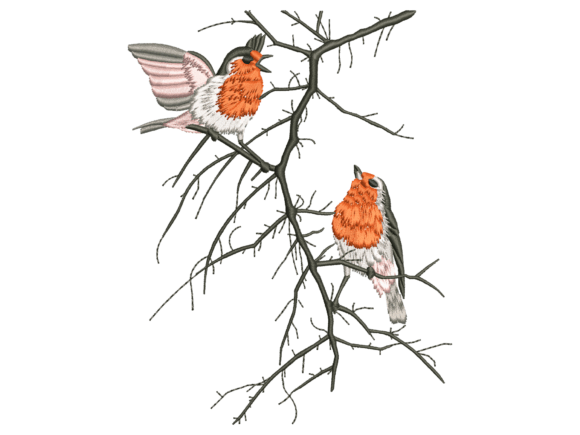
As a professional embroidery digitizer and product reviewer, I approach every new machine embroidery design with a critical eye. It is not enough for a graphic to look beautiful on a screen; it must translate flawlessly through needle and thread. When evaluating the Robin Birds on Bare Branch Embroidery design, my primary focus is on its structural integrity and emotional resonance for real-world projects. This motif immediately strikes a balance between delicate naturalism and bold graphic appeal. The bare branches suggest resilience and seasonal transition, while the robins introduce a focal point of warmth and life. For makers and shop owners, this duality is valuable. It avoids being overly cutesy, making it suitable for sophisticated adult apparel as well as nursery decor.
Evaluating Stitch Architecture and Fabric Compatibility
Before loading this embroidery file into my machine, I analyze the intended stitch types. A design featuring bare branches typically relies heavily on precise satin stitch or tapered columns to mimic organic wood texture without looking like rigid piping. In my assessment, the success of this specific layout depends on how well those branch lines connect to the bird elements. If the connections are too thin, they risk breaking during stitching or washing. If they are too dense, they can cause puckering on lighter fabrics.
For custom apparel like sweatshirts or t-shirts, the stitch density is paramount. I recommend testing this design on a scrap of your intended garment fabric first. If you are working with fleece or French terry, the texture can sometimes swallow fine details. You may need to use a slightly heavier weight stabilizer or a topping to ensure the robin’s breast and the branch tips remain crisp. Conversely, if you plan to use this for a lightweight linen tea towel or a baby onesie, check that the design does not have excessive underlay that could make the fabric stiff or distort the drape. A high-quality handmade product should feel as good as it looks, and avoiding bulletproof embroidery is key to customer satisfaction.
Real-World Application: The Custom Tote Bag Scenario
To truly understand the commercial viability of the Robin Birds on Bare Branch Embroidery, I mentally placed it on a canvas tote bag—a staple item for Etsy sellers and craft fair vendors. Canvas provides an excellent, stable foundation for nature motifs, but it also presents challenges regarding contrast and scale.
In this scenario, I envision the design centered on a natural unbleached canvas bag. The visual hierarchy works beautifully here because the negative space around the birds allows the design to breathe. However, as a designer, I would advise checking the hoop size requirements carefully before purchasing. If the design is optimized for a 4x4 hoop, it might get lost on a large tote. If it is sized for a 5x7 or larger area, it becomes a statement piece. For a personalized gift, adding a monogram beneath the branch line requires careful planning. Ensure there is adequate clearance in the digital file so that custom text does not crowd the intricate branch work. From a sales perspective, this specific aesthetic appeals to customers seeking "cottagecore" or woodland themes, making it a strong contender for spring and winter holiday collections alike.
Navigating Technical Constraints and Placement Risks
While this design has immense potential, there are specific environments where caution is necessary. As an experienced reviewer, I must highlight where Robin Birds on Bare Branch Embroidery might struggle:
- Curved Surfaces: Placing this horizontal branch layout on a structured cap or hat is risky. The distortion caused by curving the fabric can misalign the birds relative to the perch. Unless the file has been specifically digitized for curved surfaces, stick to flat items like pillow covers, aprons, or jacket backs.
- High-Pile Fabrics: On plush blankets or terry cloth, fine running stitches used for branch texture may disappear. Always use a water-soluble topping and consider increasing the column width in your editing software if possible.
- Dark Backgrounds: Robins often feature reddish-orange tones. On dark navy or black fabric, ensure the design includes sufficient underlay or edge protection to prevent the dark fabric from bleeding through the lighter thread colors. Test a swatch to verify color opacity.
- Frequent Washing: For baby embroidery or kitchen linens, durability is non-negotiable. Inspect the file for jump stitches that haven't been trimmed or secured. Long floats between the birds and branches can snag in the wash. Secure these manually or use a post-stitch trimmer to ensure longevity.
Commercial Value and Brand Consistency
For creative entrepreneurs and small business owners, consistency builds trust. Using Robin Birds on Bare Branch Embroidery across multiple product lines can create a cohesive brand identity. Imagine offering a matching set: a sweatshirt for mom and a coordinating bib for the baby. This cross-category application increases the average order value. However, you must verify the licensing terms included in the ZIP or RAR download. Confirm whether the license permits commercial use for finished physical products versus selling the digital assets themselves. Protecting your business means respecting intellectual property.
When creating printable mockups or listing photos, remember that digital renders often look flatter than actual stitching. I strongly recommend stitching out at least one physical sample before listing. Photograph the texture and sheen of the threads. Customers buy embroidery for its tactile quality, not just the image. Showing the back of the embroidery or a close-up of the satin stitch edges demonstrates professionalism and transparency, reducing return requests and building buyer confidence.
Essential Pre-Stitch Checklist for Makers
Since this is a digital product with no returns or refunds, due diligence before stitching is your best insurance policy. Follow this practical workflow when integrating this design into your production line:
- Verify File Formats: Ensure the downloaded ZIP contains the specific format your machine reads (PES, DST, EXP, JEF, etc.). Do not assume compatibility.
- Audit Dimensions: Open the file in your machine or editing software to confirm the exact dimensions match your intended project area. Resizing can alter stitch density; stay within the recommended resize limits.
- Thread Color Mapping: Review the color change chart. Sometimes digital files use generic colors. Map them to your specific brand palette to maintain consistency across different batches.
- Stabilizer Selection: Match the stabilizer to the fabric weight, not just the design density. Cut-away for stretchy knits, tear-away for stable wovens.
- Test on Scrap: Never stitch directly onto a final product without a test run. Check for registration issues, tension problems, or design elements that don't align perfectly.
The Robin Birds on Bare Branch Embroidery design offers a timeless aesthetic that bridges the gap between traditional needlework and modern maker culture. Its success in your studio will depend entirely on thoughtful preparation and respect for the medium. By understanding the interplay of stitch type, fabric choice, and end-use application, you transform a simple digital file into a cherished heirloom or a best-selling boutique item. Approach this design with technical mindfulness, and it will serve as a reliable asset in your embroidery repertoire for seasons to come.