Sailor Penguin Embroidery Design Bundle Review
As a professional embroidery designer specializing in commercial merchandise and brand identity, I approach every new machine embroidery design with a critical eye toward production viability. When evaluating the Sailor Penguin Embroidery Design Bundle for small business applications, my focus shifts from simple aesthetic appeal to functional durability and branding potential. While this design is marketed for nursery decor and baby items, its clean lines and distinct silhouette offer surprising versatility for boutique merchandise, café branding, and creative studio assets. This review analyzes how this specific embroidery file performs when adapted for professional use, ensuring your investment translates into high-quality finished products.
Visual Personality and Brand Alignment
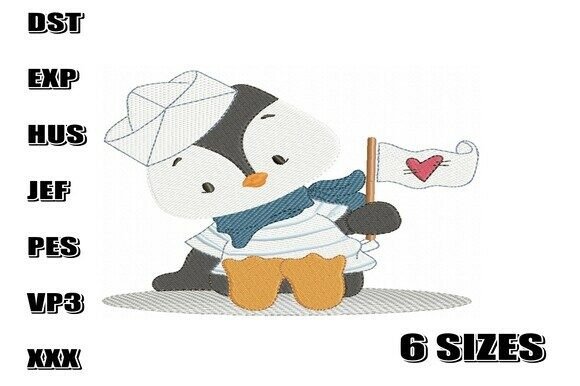
The first impression of the Sailor Penguin Embroidery Design Bundle is one of approachable professionalism. In the context of small business merch, the sailor motif bridges the gap between playful and nautical classic. For businesses like coastal bakeries, pet grooming salons, florists, or children’s boutiques, this design communicates friendliness without sacrificing legibility. Unlike overly complex cartoon characters that can become muddy when stitched at smaller sizes, the penguin’s bold shapes suggest a digitizing structure that will hold up well on various garments.
From a brand identity perspective, this design serves as an excellent mascot or secondary logo element. It feels handmade yet polished, which is crucial for Etsy sellers and artisan brands trying to establish trust. The visual weight appears balanced, meaning it can function as a primary chest logo on a polo or a subtle accent on a tote bag without overwhelming the garment. However, because it originates from a nursery category, business owners must carefully select thread colors to mature the look if targeting an adult demographic. Swapping pastel baby blues for navy, slate grey, or metallic gold can instantly transform this digital embroidery file from a nursery decoration into a sophisticated brand asset.
Commercial Applications and Merchandise Versatility
In real-world production scenarios, the Sailor Penguin Embroidery Design Bundle demonstrates significant utility across multiple product categories. For custom apparel, specifically staff uniforms and aprons, the design’s inclusion of six sizes is a major operational advantage. A large format works beautifully on the back of a canvas apron embroidery project for baristas or bakers, while the smallest size can serve as a discreet pocket logo or sleeve detail. This scalability ensures visual consistency across different uniform pieces, which is essential for maintaining a cohesive team appearance.
For tote bag design and retail merchandise, this bundle offers immediate value. Canvas and linen fabrics provide a stable base for machine embroidery, allowing the penguin’s details to shine. I envision this design working exceptionally well on drawstring bags for event giveaways or as a branded add-on for packaging. Creative studios and craft businesses can also utilize this design for internal branding on tool rolls, pin cushions, or workshop signage. The variety of formats included—DST, EXP, HUS, JEF, PES, VP3, and XXX—ensures compatibility with almost all commercial and multi-needle machines, reducing downtime spent converting files.
Furthermore, this design is a strong candidate for creating an embroidered patch. Because the sailor penguin likely features defined borders and solid fill areas, it can be easily adapted into a merrowed-edge patch for caps, jackets, or backpacks. Patches are a high-margin item for small businesses, and having a versatile, cute mascot design ready for patch production can open new revenue streams.
Production Considerations and Technical Limitations
Despite its versatility, there are specific environments where the Sailor Penguin Embroidery Design Bundle requires careful handling. As a designer, I advise caution when applying this to cap embroidery. Curved surfaces distort stitch registration, and if the penguin design contains intricate facial details or tiny text elements within the sailor outfit, those details may be lost or distorted on a structured hat front. Always test the smallest viable size on a curved cap block before committing to a full production run.
Stitch density is another critical factor. Designs categorized for nursery items sometimes prioritize softness over structural integrity. If you plan to use this on textured fabrics like terry cloth towels or heavy denim aprons, you may need to add an underlay or increase density slightly to prevent the fabric texture from poking through the stitches. Conversely, if stitching on lightweight performance wear or baby onesies, verify that the design isn’t too dense, as this can cause puckering or fabric damage. The interaction between fabric texture and thread tension must be tested physically; digital previews cannot account for the loft of fleece or the weave of canvas.
Additionally, consider the washing requirements of your end product. If this design is used for restaurant uniforms or kitchen aprons that face industrial laundering, ensure the thread colors are colorfast and the stabilizer used during production was permanent rather than tear-away. Temporary stabilizers can degrade over time, causing the design to warp after repeated wash cycles.
Professional Designer Notes for Implementation
To maximize the commercial potential of the Sailor Penguin Embroidery Design Bundle, follow these practical steps before launching your product line:
- Test in Black and White First: Before running colored samples, stitch the design in black thread on white fabric. This reveals the true stitch pathing, jump stitch locations, and registration accuracy without the distraction of color blending.
- Verify Small Size Legibility: Since the bundle includes six sizes, test the absolute smallest version on your intended merchandise. If the sailor hat brim or facial features disappear at 2 inches, do not use that size for branding. Stick to sizes where all details remain distinct.
- Create a Printable Mockup: Use software to overlay the design onto photos of your actual blank merchandise. Share this printable mockup with clients or stakeholders for approval before hooping fabric. This manages expectations regarding placement and scale.
- Check Stabilizer Pairings: Match your stabilizer choice to the specific merchandise. Use cutaway for stretchy knits and uniforms, and tear-away only for stable woven fabrics like canvas totes. Never guess on stabilizer for commercial orders.
- Confirm Commercial Licensing: Although the description mentions personalized gifts and nursery decor, always verify the specific license terms regarding mass production or resale of embroidered goods. Ensure your usage aligns with the designer’s permissions for commercial embroidery.
- Audit Thread Color Contrast: Review thread colors against your brand palette. High contrast ensures visibility on dark uniforms, while tonal threading creates a premium, subtle look for boutique items. Avoid matching thread color exactly to fabric color unless aiming for a tone-on-tone effect.
Elevating Product Value Through Strategic Design
Ultimately, the Sailor Penguin Embroidery Design Bundle represents more than just a cute graphic; it is a functional tool for enhancing perceived product value. In the competitive landscape of handmade products and local business merchandise, professional-grade embroidery signals quality and attention to detail. When a customer receives a gift or purchases an item featuring this design, the tactile nature of the stitches reinforces the handmade product narrative.
By treating this design assets bundle with the same rigor as a corporate logo digitization project, small business owners can extract maximum ROI. Whether used as a signature mark on a bakery apron, a charming patch on a kid’s backpack, or a branded element on a florist’s tote, the key lies in intentional application. Respect the technical constraints of your machinery, validate the design on your specific substrates, and leverage the included size variations to create a cohesive merchandise ecosystem. With proper execution, this embroidery design becomes a reliable ambassador for your brand, blending charm with commercial durability.