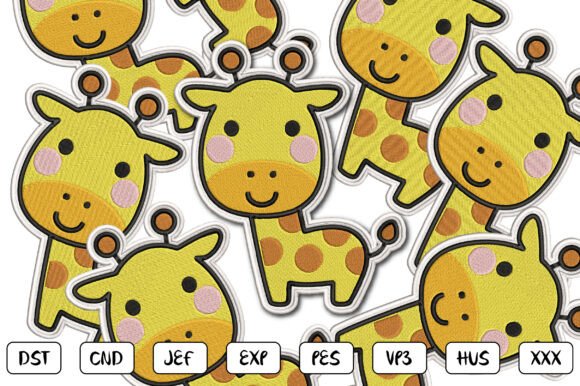
Giraffe Patch Embroidery Design Review
As I prepare my inventory for the upcoming weekend craft fair, I am constantly evaluating which digital assets will translate best into physical sales. When reviewing the Giraffe Patch Embroidery Design, my immediate assessment focuses on its commercial viability for handmade market products. This machine embroidery design falls squarely into the kawaii aesthetic, offering a soft, approachable take on wild animals that differs significantly from realistic wildlife art. For an Etsy seller or boutique maker, this distinction is crucial. The charming facial features and simplified lines suggest a product that appeals to parents, nursery decorators, and fans of cute stationery or accessories rather than traditional hunters or safari enthusiasts.
First Impressions and Booth Display Potential
When setting up a table display, visual hierarchy is everything. Customers scan a booth in seconds, and the Giraffe Patch Embroidery Design reads as bold yet gentle. The kawaii style inherently signals "handmade" and "gift-ready," which aligns perfectly with the expectations of craft fair shoppers. Unlike complex, photorealistic embroidery files that can look muddy from a distance, this design relies on clean shapes and expressive character. From three feet away, a prospective buyer should instantly recognize the giraffe and feel an emotional connection to its cuteness.
For my own booth planning, I view this design as a high-engagement anchor for smaller items. It lacks the aggressive masculinity of some wild animal embroidery, making it safer for a broader demographic. The soft vibe suggests it would perform exceptionally well on pastel or neutral backgrounds, creating a cohesive brand look across multiple product types. If you are a creative entrepreneur curating a collection, this design serves as an excellent bridge between nursery themes and general safari motifs.
Best Performing Products for Market Sales
Not every embroidery file suits every product. Based on the stitch structure implied by a kawaii style, I have identified specific applications where the Giraffe Patch Embroidery Design will likely generate the highest return on investment.
- Tote Bag Design: Canvas totes are a staple for handmade markets. This design works beautifully as a centered focal point on natural cotton canvas. The contrast of bright thread colors against unbleached fabric highlights the kawaii features without competing with fabric texture.
- Tea Towel Embroidery: Kitchen linens sell consistently at fairs. Because this giraffe has a friendly face, it transforms a utilitarian item into a giftable keepsake. Flour sack towels provide a smooth surface that accommodates the fill stitches typical of this style better than waffle-weave textures.
- Embroidered Patch: Given the name itself, producing this as a standalone patch is a logical move. Patches allow customers to customize their own denim jackets or backpacks later. As a small shop product, patches have a low price point and high perceived value when displayed in organized grids.
- Apron Embroidery: For children’s aprons or whimsical adult kitchen wear, this design adds personality. Placement on the chest pocket area creates a balanced look that photographs well for online listings.
- Fabric Pouches and Zipper Bags: Small zipper pouches are impulse buys. The compact nature of a kawaii giraffe fits perfectly within 4x4 hoop sizes, maximizing production efficiency while maintaining detail clarity.
Production Practicality and Batch Efficiency
For commercial embroidery and batch production, time is money. A major advantage of kawaii-style designs like this Giraffe Patch Embroidery Design is typically lower stitch density compared to realistic shading. This means faster run times and less thread consumption. When preparing for a market, I need designs that can be repeated dozens of times without excessive wear on equipment or operator fatigue.
Photographing this design for printable mockups or Etsy listings is also straightforward. The distinct outlines and solid color blocks reproduce clearly in digital photos, even with basic lighting. Complex gradients often photograph poorly or appear pixelated in thumbnails, but the flat, graphic nature of this giraffe ensures the finished product matches the customer's expectation. This reduces returns and increases buyer confidence. Furthermore, because the design is stylized, it scales reasonably well. While you must always check specific dimensions, kawaii designs generally maintain their integrity when resized slightly for different applications, unlike detailed portraits that distort easily.
Critical Use Notes for Professional Results
Despite its apparent simplicity, there are technical considerations to ensure your handmade product looks premium. As an experienced designer, I advise paying close attention to the following variables when stitching out the Giraffe Patch Embroidery Design.
Fabric Texture and Stabilizer Choice
Kawaii faces rely on smooth satin stitches for eyes and mouths. If you embroider directly onto textured terry cloth or fleece without proper preparation, the details will sink in and disappear. Always use a water-soluble topping to keep stitches above the pile. For tote bags and canvas, a medium-weight cutaway stabilizer is usually necessary to prevent puckering around dense fill areas. Test your stabilizer combination on scrap fabric before committing to a final product; the wrong choice can make a cute design look amateurish.
Thread Colors and Contrast
The charm of this design lives in the facial expression. Ensure your thread colors offer sufficient contrast against your base fabric. Dark brown outlines on black fabric will vanish, ruining the kawaii effect. Conversely, neon threads might clash with the intended soft safari vibe. Stick to warm browns, soft yellows, and muted accents unless you are intentionally aiming for a psychedelic look. Remember that thread sheen varies by brand; rayon offers vibrancy, while polyester provides durability for washable items like tea towels.
Sizing Limitations
While versatile, this design has a minimum viable size. Shrinking it too much to fit a tiny collar or sleeve cuff may cause the eye details to merge or the mouth to become a blob. Consult the digitizer’s notes regarding minimum dimensions. If you need a micro-version for caps, verify that the file has been specifically optimized for curved surfaces and small hoops. Standard flat embroidery files often distort when forced onto a cap frame without modification.
Designer Checklist Before Selling
Before listing any item featuring the Giraffe Patch Embroidery Design or taking it to a fair, run through this professional checklist to protect your business reputation.
- Verify Commercial Licensing: Never assume a digital embroidery file includes rights to sell finished products. Check the license terms explicitly. Some designers restrict mass production or require attribution.
- Stitch Out a Physical Sample: Digital previews are not enough. You must see how the design interacts with your specific fabric and thread. Look for registration issues, jump stitch placement, and overall density.
- Confirm Hoop Size Compatibility: Ensure the design fits comfortably within your machine’s maximum sewing field with adequate margin for the hoop grip. Crowding the edges leads to alignment errors.
- Create Real Mockups: Photograph your actual stitched sample on the intended product. Buyers want to see texture and scale. Use these images for your Etsy listings and social media marketing.
- Test Wash Durability: If selling tea towels or aprons, wash and dry your sample to check for thread shrinkage or stabilizer residue. A product that warps after one wash destroys customer trust.
- Evaluate Brand Consistency: Does this giraffe match your existing inventory? If your booth is strictly modern minimalist, a kawaii animal might feel out of place. Cohesion sells.
Maximizing Value Through Strategic Application
Ultimately, the Giraffe Patch Embroidery Design represents a strong opportunity for makers targeting the gift and nursery market. Its success depends less on the file itself and more on your execution and product selection. By pairing this adorable safari motif with high-quality blanks, appropriate stabilizers, and thoughtful photography, you elevate a simple digital asset into a desirable handmade product. Whether used as a standalone embroidered patch or the centerpiece of a tote bag design, its universal appeal makes it a reliable performer for both digital sellers and physical market vendors. Always prioritize quality control and licensing compliance to build a sustainable embroidery business that customers return to season after season.