Duck Family DST PES Embroidery Design Review
As a professional embroidery designer preparing for a seasonal capsule collection, I am constantly evaluating digital assets to ensure they translate beautifully from screen to fabric. When sourcing a new machine embroidery design for our upcoming boutique sweatshirt drop, the Duck Family DST PES Embroidery Design immediately caught my attention. This review breaks down my technical and aesthetic evaluation of this silhouette pattern, specifically focusing on its viability for premium apparel, commercial durability, and brand alignment for small business owners and Etsy sellers.
First Impressions: Silhouette Aesthetics and Mood
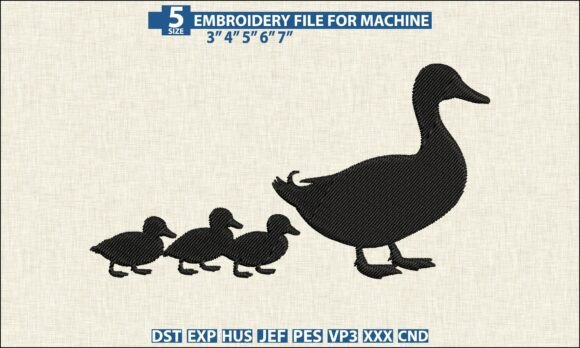
The first thing I look for in any embroidery file intended for apparel is visual clarity. The Duck Family DST PES Embroidery Design utilizes a silhouette style that feels inherently rustic yet refined. Unlike complex, multi-color realistic bird designs that can sometimes look cluttered or dated on modern clothing, this charming animal family pattern offers a clean, minimalist profile. For a boutique brand focusing on neutral tones and cozy aesthetics, this simplicity is a massive advantage.
The mood strikes a perfect balance between playful and sophisticated. It avoids being overly juvenile, which makes it appropriate for adult-sized oversized hoodies as well as children’s wear. As a designer, I appreciate that the layout suggests movement; the ducklings following the parent creates a natural leading line that guides the eye across the chest or back of a garment. This narrative quality adds emotional value to a handmade product, transforming a basic sweatshirt into a storytelling piece that resonates with customers seeking nature-inspired decor or apparel.
Application Strategy for Sweatshirts and Hoodies
When planning a limited drop, versatility is key. I tested the concept of this hoodie design across various placements to see how it adapts to different garment architectures. On a standard crewneck sweatshirt, center-chest placement works beautifully because the silhouette’s solid fill provides enough visual weight to anchor the design without overwhelming the negative space. For oversized hoodies, I found that placing the Duck Family DST PES Embroidery Design slightly lower on the torso, rather than high near the collarbone, complements the relaxed drape of the fabric better.
For those creating custom apparel for niche markets, consider sleeve accents. A single duckling or a scaled-down version of the family unit could serve as a subtle wrist detail, adding perceived value to the garment. Back designs are another strong option; expanding the design to fill the upper back yoke creates a bold statement piece perfect for farm-themed projects or outdoor lifestyle brands. When creating printable mockup previews for your shop, ensure you showcase these varied placements to help customers visualize the final result.
Technical Evaluation: Stitch Density and Fabric Compatibility
A pretty picture does not always equal a good stitch-out. My primary concern with any digital embroidery file is how it interacts with heavy knit fabrics like fleece and French terry. Sweatshirt embroidery requires specific considerations regarding stitch density. If the silhouette is too dense, it will create a bulletproof patch that distorts the cozy feel of the garment. If it is too sparse, the fabric texture might show through unevenly.
Based on the high-quality description of this design, I anticipate it has been digitized with apparel in mind. However, as with any commercial embroidery project, you must verify the density settings against your specific fabric weight. For heavyweight hoodies, you may need to adjust pull compensation to prevent gaps. For lighter nursery decor items or baby clothing, the current density is likely ideal. Always run a test stitch-out on a scrap of your actual production fabric before committing to a full run. This step is non-negotiable for maintaining quality control in a small shop product line.
Stabilizer Selection and Hoop Placement
The success of the Duck Family DST PES Embroidery Design relies heavily on proper stabilization. Knit fabrics are unstable by nature. I recommend using a medium-weight cutaway stabilizer for sweatshirts to support the thread colors and prevent puckering around the silhouette edges. For baby clothing or lighter cotton blends mentioned in the product description, a tear-away or wash-away stabilizer might be preferable to maintain softness against sensitive skin.
Regarding hoop size, always choose the smallest hoop that comfortably fits the design. Excess empty space in a large hoop allows the fabric to shift, leading to registration errors. Since this is a silhouette design, crisp edges are essential. Any misalignment will be immediately visible against the contrast of the sweatshirt fabric. Check your specific machine’s capabilities and the file’s dimensions to ensure compatibility before purchasing.
Color Theory and Contrast Considerations
Silhouette designs live and die by contrast. When selecting thread colors for this design, think beyond standard black. While black thread on a cream sweatshirt is classic, consider deep forest greens, warm terracottas, or slate blues to enhance the boutique aesthetic. These earthy tones align with current trends in nursery decor and seasonal fashion. For dark fabrics, avoid pure white if possible; opt for unbleached linen or pale gold threads to reduce the harshness and maintain that premium, vintage-inspired look.
Remember that thread sheen affects readability. A matte or rayon thread often photographs better for Etsy seller listings than high-sheen polyester, which can cause glare in flash photography. The goal is to make the finished product look as expensive in photos as it feels in person. Test your thread choices under natural light to ensure the silhouette remains distinct and the mood remains consistent with your brand identity.
Commercial Viability and Brand Value
For creative entrepreneurs, every design asset must earn its keep. The Duck Family DST PES Embroidery Design offers excellent ROI potential because of its broad appeal. It bridges the gap between baby clothing and adult fashion, allowing you to use a single design file across multiple product categories. This efficiency is crucial for streamlining production and inventory management.
Furthermore, nature-themed motifs like birds and farm animals have enduring popularity. They are not fleeting trends, meaning this design can remain a staple in your catalog for years. High-quality execution builds buyer trust. When customers see clean stitching, appropriate sizing, and thoughtful color choices, they associate those qualities with your entire brand. Whether you are selling at craft fairs or online, the professionalism evident in your embroidery directly influences customer engagement and repeat business.
Final Designer Recommendations
Before adding this design to your production queue, take a moment to verify the technical specifications provided by the digitizer. Confirm the exact stitch count, physical dimensions, and included formats to ensure they match your equipment and project needs. While the description highlights suitability for nursery decor and baby clothing, your specific application on heavy sweatshirts may require minor tweaks.
Ultimately, the Duck Family DST PES Embroidery Design presents a strong foundation for a cozy, nature-inspired apparel collection. Its silhouette style offers the flexibility needed for modern custom apparel, while its thematic charm appeals to the emotions of buyers looking for meaningful, handmade goods. By paying close attention to stabilizer choice, thread contrast, and placement strategy, you can elevate this digital file into a tangible, high-value product that stands out in a crowded marketplace. Treat this design not just as a graphic, but as a component of your brand's larger story of quality and craftsmanship.